
Room for Glory
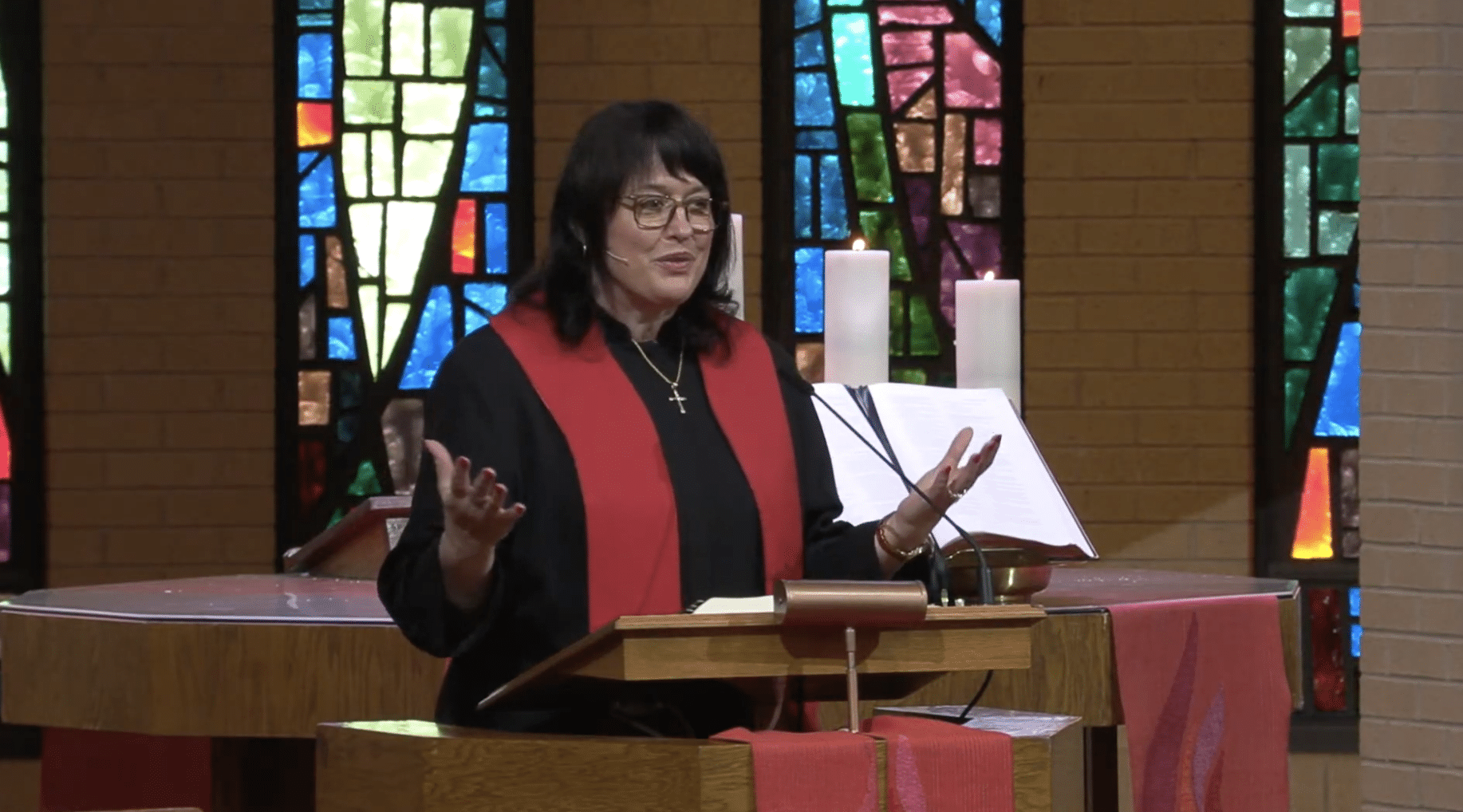
In May, Coker had the joy of welcoming Bishop Leah Hidde-Gregory to worship, she came to help consecrate our newly renovated Family Life Center. Her opening prayer, though, wasn’t focused on the building but -rather- it was focused on the room. Making room. Making room for glory. Her prayer was that everyone gathered had come for one reason: to see and experience the glory of the Lord. It set the tone for a message that pushed past brick and mortar and straight to the heart of what a church is for.
A God Who Journeys With Us
Drawing from Solomon and the building of the temple in 2 Chronicles, the Bishop reminded us where Israel’s worship began — not in a permanent structure, but in a tabernacle, a tent that moved with the people wherever they went. The ark went with them. The lesson, she said, is that we have a God who journeys with us.
Wherever we are on the road of faith — whether our faith feels rock-solid, whether we’re questioning everything we’ve ever learned, or whether we’re just exploring what this whole God thing is really about — it’s okay. God wanders with us. He journeys with us.
She traced a pattern that runs through the whole of Scripture: people pray, they repent, they align their hearts with God, His glory shows up, and then there is nothing left to do but praise. We tend to wander, she admitted, which is exactly why we have to keep stopping, righting our hearts, and crying out to the Lord. And when we cry out, He is always loving, always good, and always quick to receive our prayers.
Be a Praying People
The first of three things the Bishop asked us to recognize: a community of faith must be a praying people.
She illustrated it with stories from Mid Texas’s international partnership with the church in Bulgaria. When their team brought a “Wall Shakers” prayer event across the country, she said the presence of God grew so heavy in those gatherings she could hardly believe it. From church to church the crowds swelled as word spread that they were praying for the sick, for those battling addiction, for the unemployed.
The fruit kept coming. On a return visit a year later, person after person walked up to say their cancer was gone, that they’d started seminary, that a prayed-for job had come through within a week. The lasting change in Bulgaria was that anointing prayer for healing became a regular part of Sunday worship — and as they made room for it, their worshiping numbers grew. The takeaway was simple but pointed: we need to be a people who truly believe that when we pray, God hears and God responds.
Expect God to Do Something
The second charge: be a church that expects God to act.
Do we come on Sunday morning actually expecting to encounter the living Lord — through the music, a prayer, a word from a friend, the sermon? Or do we come out of habit, because this is simply what we do on Sundays? The Bishop honored those who show up faithfully out of duty, rain or shine. But she was direct: God isn’t looking for our duty. He’s looking for a covenant relationship. God wants to show up in our lives.
The Flag She Swore She’d Never Wave
The most memorable part of the message was a confession. A self-described “high church” woman who loves organ music and classical hymns, the Bishop described attending the Mid Texas Sound conference shortly after being elected — reluctantly, she admitted — to the episcopacy. Watching the lively praise band and the flag-bearers waving banners, she leaned over to her teenage son and declared: no matter how much Holy Spirit she got, she was never waving a flag.
That night at the altar, God dismantled her resistance one blessing at a time. Asked to come forward and pray, she instead found herself ministering to a young single mom with two small children who felt called into ministry — exactly the person God knew she could encourage. Then a young woman named Grace came and prayed over her, and the burden she’d carried all day lifted. And when she looked up, a flag-bearer named Reuben was standing there with his tongue-of-fire banner. She quietly asked the Lord just to let the flag brush her shoulder. Instead, Reuben turned, looked at her, and handed her the flag.
And she waved it — for a whole song.
Her point wasn’t about flags at all. It was that when we finally reach the end of ourselves, of what we can do with what we have, that is exactly where God’s glory shows up and the power of the Holy Spirit changes our lives. It sets our snark aside and gently says, You think you know — but my way is better.
More Than Brick and Mortar
She brought it home to the building she had come to consecrate. Her prayer was that we would realize it was never about the brick and mortar, the flooring, or the paint — but about it being a place where God draws people closer to Himself. A place of covenant.
A church, she warned, can have a packed calendar and empty altar rails. It can have stunning music that is performance but not praise, and brilliant sermons that educate without transforming a single heart. To get past that, we have to surrender ourselves — and only then do we find the glory of the Lord.
Echoing the moment in 2 Chronicles when Solomon finished praying and fire fell and the glory of God filled the temple so completely the priests had to step back, the Bishop testified to seeing that same unexplainable haze in her own years of worship — the weight of God descending on a room. Her closing prayer for Coker was that the glory of the Lord would be so real, to those already here and to all who would come, that they couldn’t help but declare: God is good, and His love endures forever.
She also left us with a vision for the next generation. God is raising up young people who don’t need us simply to pass them the baton, she said — they need us to take hold of it and run alongside them. To disciple them, love them, be present with them, and yes, even let them be a little goofy. Our job is to let God’s glory descend on every generation of the church.
To watch the message from Bishop Leah, click the video thumbnail below.